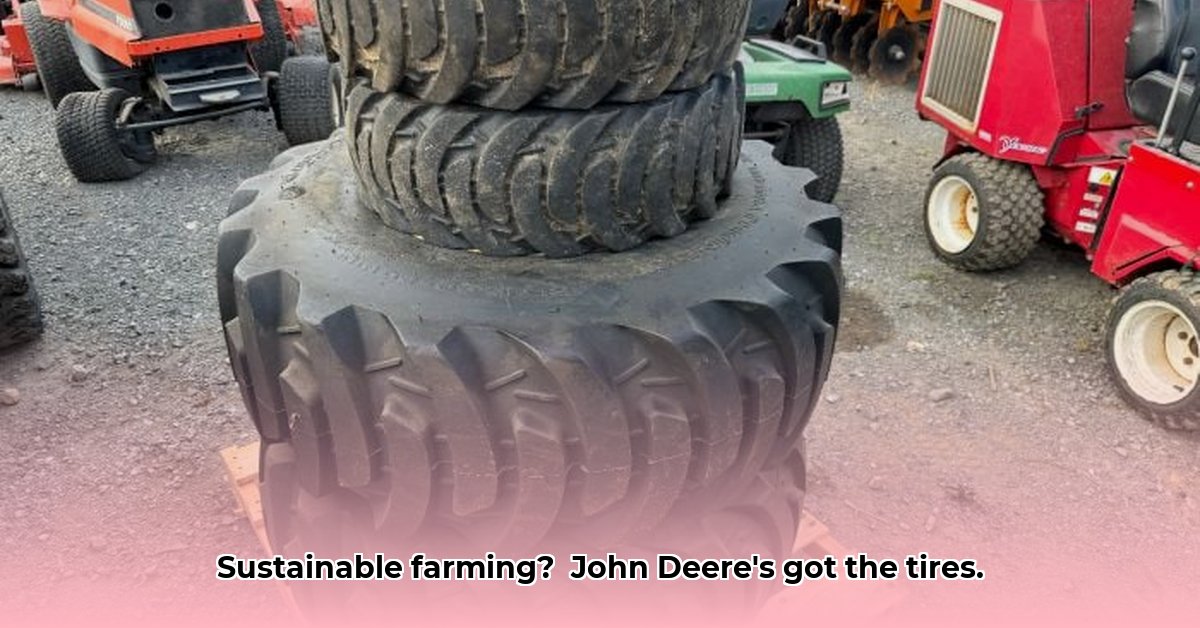
Choosing the right tires or tracks for your John Deere tractor is a critical decision impacting fuel efficiency, soil health, and overall farm profitability. This article analyzes John Deere's tire and track offerings within the context of sustainable agriculture, providing actionable insights for farmers, agribusinesses, and policymakers. For more on specialized tires, see this helpful resource on tractor tire options.
John Deere's Wheel, Tire, and Track Technology: Optimizing Performance and Sustainability
John Deere offers diverse tire and track systems catering to various operational needs and soil conditions. Selecting the optimal system depends heavily on factors such as terrain, soil type, and farming practices.
Tires: Available in various sizes and tread patterns, tires offer a balance between traction and soil disturbance. Deep treads enhance grip in muddy fields, while shallower treads are better for smoother surfaces, minimizing compaction. However, slippage on hills or in mud can lead to fuel inefficiency.
Tracks: Resembling tank treads, tracks provide superior traction, especially in challenging conditions. This reduces slippage, leading to fuel savings. However, initial costs are significantly higher. The long-term benefits of fuel savings and reduced wear must be weighed against the higher upfront investment.
Sustainability Assessment: Environmental Impacts and Trade-offs
Sustainability extends beyond immediate operational efficiency. The life cycle of tires and tracks, from manufacturing to disposal, profoundly impacts the environment.
Manufacturing: Production requires considerable resources and energy, generating greenhouse gases. The materials used—rubber, steel, etc.—also contribute to the carbon footprint.
Disposal: End-of-life tire and track disposal presents a significant environmental challenge. Recycling infrastructure is still under development. However, progress is being made with companies exploring sustainable materials like bio-based rubber to mitigate environmental impact.
Soil Compaction: Heavy machinery can compact soil, affecting water infiltration, aeration, and plant growth. Tracks generally cause less surface compaction than tires due to their larger surface area, potentially improving water infiltration and aeration. However, research is ongoing to fully understand the long-term effects of both tires and tracks on soil structure and subsurface compaction.
Actionable Insights for Stakeholders: Driving Sustainable Practices
Sustainable agriculture demands a collaborative effort involving farmers, manufacturers, and policymakers.
For John Deere:
- Conduct comprehensive life-cycle assessments (LCAs) of all tire and track models, evaluating environmental impacts at every stage. Make this data readily available to consumers.
- Invest in R&D for sustainable materials (e.g., bio-based rubber, recycled components) to significantly reduce environmental footprints.
- Develop innovative end-of-life management solutions, including improved recycling options and responsible disposal methods.
For Farmers and Agribusinesses:
- Conduct thorough cost-benefit analyses considering the long-term impacts of using tires versus tracks, factoring in fuel efficiency, soil health, and yield.
- Adopt precision agriculture techniques to optimize machinery use, minimizing soil compaction and maximizing efficiency.
- Implement responsible tire and track management: regular maintenance, proper storage, and exploration of recycling options.
For Policymakers:
- Mandate manufacturers to report the environmental impact of their products, fostering transparency and allowing farmers to make informed choices.
- Implement incentives, such as subsidies, to encourage the use of sustainable materials and practices.
- Develop regulations for responsible tire and track disposal and recycling, mitigating environmental damage.
Conclusion: Towards a Sustainable Future in Agriculture
Selecting the right tires or tracks is crucial for both profitability and environmental responsibility. While this article provides helpful guidance, ongoing research is essential to fully grasp the long-term impacts of various options on soil health and the environment. A collaborative effort is necessary to advance sustainable practices and ensure a prosperous future for agriculture.
Appendix: Further Resources and Data
(This section would include links to relevant research papers, John Deere specifications, and other supporting documents.)